Patient education
SI joint pain
The sacroiliac joints connect the base of the spine to the pelvis. When one or both are irritated, pain can show up in the low back, buttock, or upper leg—and it can travel. Care often starts without surgery. Injections, other procedures, and fusion are options when they fit.
- Pain may be on one side or both, and it can travel
- An injection can help confirm the joint and may ease symptoms
- Sitting, standing, or climbing stairs may flare symptoms
What it is
The sacroiliac (SI) joints sit where the sacrum meets the iliac bones of the pelvis. They move only a little, but they transfer load between the spine and the legs. Inflammation, injury, arthritis, pregnancy-related changes, or prior lumbar fusion can make an SI joint painful.
SI joint pain often feels like low-back or buttock pain. It may stay on one side or involve both. It can radiate into the groin, thigh, or farther down the leg and be mistaken for a hip problem or sciatica. Exam maneuvers that stress the joint help. Imaging alone rarely proves the SI joint is the cause.
A fluoroscopy-guided injection that numbs the joint is a common way to confirm it as a pain source. That same injection may also ease symptoms for a longer period in some people. Results vary. Buttock and low-back pain have many causes—including the lumbar spine and the hip—so the plan starts by sorting those out thoughtfully.
If symptoms stay strong after nonsurgical care and the joint is clearly involved, other procedures aimed at the SI joint may be discussed. Fusion is one path I use when it fits—not the automatic next step for everyone.
Where the SI joints sit
-
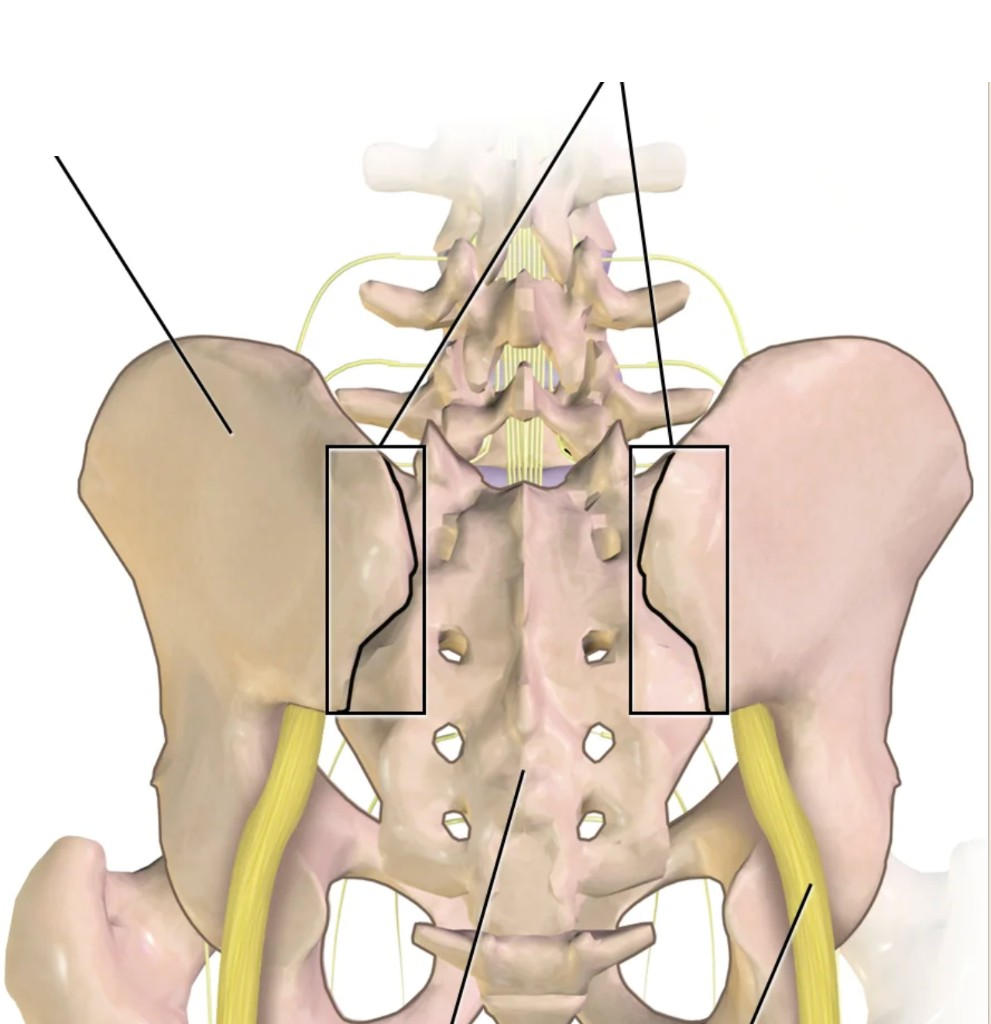 IliumSacroiliac (SI) joint
Back view of the pelvis. The sacroiliac joints sit where the sacrum meets each iliac bone.

Illustration adapted from Blausen Medical (CC BY 3.0).
How care usually moves
Care often starts without surgery. Many people manage symptoms with a nonsurgical plan. Injections help confirm the joint and may ease pain. Other procedures may be discussed when they fit. Fusion is one option when the joint is confirmed and symptoms remain hard to live with—not the only next step.
-
Non-surgical care
Activity changes, medicine for pain or inflammation, physical therapy, and sometimes an SI belt are common first steps. The goal is to calm the joint and improve how you move.
-
Injections
A fluoroscopy-guided SI joint injection can help identify whether the joint is the pain source. Marked relief while the anesthetic is working supports that finding. A steroid may be included. For some people, the injection also eases symptoms for a longer period. It is not a cure on its own, and results vary.
-
Other procedures, when they fit
I do not move straight to fusion for every confirmed SI joint problem. When symptoms stay strong after simpler care, other procedures aimed at the SI joint may be part of the talk. The choice depends on your exam, how you responded to injections, imaging, and your goals.
-
SI joint fusion, when it fits
When fusion is a reasonable choice—after the joint is confirmed and other care has not been enough—implants are placed under anesthesia to stabilize the joint through a planned approach with imaging guidance. Exact implant type and approach depend on your anatomy. It is not the right choice for everyone, but it is a procedure I perform when it fits.
Main risks
Risks depend on the path we choose.
- Medicine and injection side effects
- Infection, bleeding, or hematoma
- Blood clots
- Temporary increase in pain after an injection
- Nerve injury, numbness, or weakness
- Implant malposition or need to reposition hardware, if fusion is performed
- Fusion that does not heal solidly (nonunion)
- Ongoing pain, or pain from another source that was not the SI joint
- Need for more surgery later
- Symptoms that do not improve, or that return
- Risks of sedation or anesthesia, when used
Nonsurgical care can have side effects too. Published reviews note that diagnosis must be secure before fusion. This list is not complete. We go over the main risks that apply to you before any procedure.
Recovery, in general
With nonsurgical care, improvement can take weeks to months. After an injection, most people go home the same day. Activity limits and follow-up are set during the visit.
After a procedure or fusion, many people go home the same day or after a short stay. Walking is often encouraged early, with activity limits while healing. Timing for driving and work is set with you based on comfort, safety, and your exam.
Recovery is not the same for everyone. The goal is improvement—not a promise that every symptom will disappear. Call right away for fever, wound drainage, new weakness, or new or worse pain.
Every patient is different; your plan may differ.
Related topics
Who this page is for
This page is general education for people who have been told they may have SI joint pain, or who are reading about buttock or low-back pain that may come from the sacroiliac joint—and about the care options that can follow.
It is not a diagnosis or a treatment plan. Those come from a visit with a clinician who knows your history and exam.
Seek emergency care for these signs
- Sudden loss of bowel or bladder control
- New numbness in the groin
- New, severe weakness in a leg
Call 911 or go to an emergency department. Tell your clinician about fever with new spine or pelvic pain, a recent major infection, or a history of cancer with new spine symptoms.
Request an appointment
To request an appointment, use my page on the Plano Orthopedic website.
Request an appointment (opens my page on the Plano Orthopedic website)